The Kindergarten program’s foundation starts with building relationships with the children, families and the community that surrounds us. Our philosophical framework is grounded in the Reggio Emilia approach and we use the “The Kindergarten Program” alongside “How Does Learning Happen” to guide us in our daily practices. These documents are intentionally woven throughout our day as we foster an environment of inclusion and belonging as we celebrate the uniqueness of each child. Exploring language and culture is built into our program and we strive to represent the cultures of the children in our program daily. Children can see themselves represented within our classroom and their individuality is embodied in all aspects of our daily routines. Our curriculum is designed with the children at the centre and protagonists of their own learning. Children and educators are co-learners as we navigate curriculum, research, relationships, emotions and nature in partnership. We collaborate on building our curriculum to ensure their voices are represented in our planned experiences.
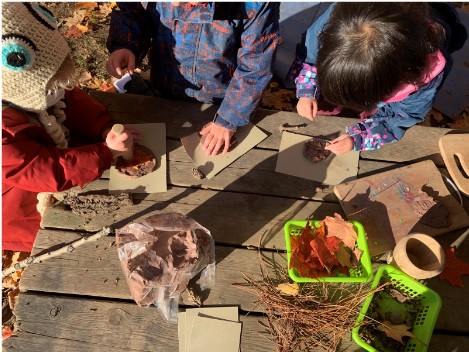
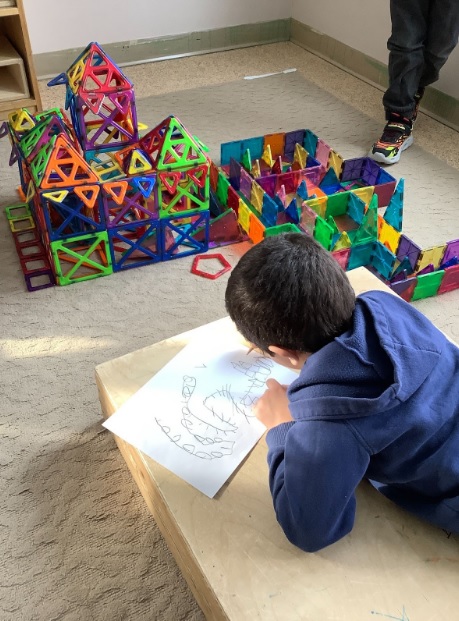
Our curricular projects are transdisciplinary in that knowledge built in one topic can be transferred to other areas of interest and this allows us to intricately weave the language arts, mathematical concepts, science and technology, visual and performing arts through careful consideration through collaboration. French is woven into our planned curricular opportunities on a weekly basis and there are opportunities for children to gain familiarity with French both verbally and in written formats. Our projects are in depth and intentional as we formulate and test our theories, collaborate in research, and find answers to our deepest questions through hands-on opportunities. We take time to build these projects as they can last anywhere from one to four months or longer depending on where the children lead us in our discoveries. This begins with observations of children’s ideas and questions, how they are engaging with materials and conversations they are having while engaged in play. Next we negotiate our curriculum through dialogue between educators and children as we plan our group opportunities and gatherings. Furthermore, we reflect on our planned opportunities through pedagogical documentation where the children’s learning is made visible to them, to their families and to us educators. We engage in meaningful dialogue together about the knowledge being built. Our role as educators is to follow the cue’s of the children and offer extension to the ideas they are wanting to pursue. We offer digital materials and technology is woven into our daily opportunities for an immersive experience into our inquiries. Through these immersive experiences into our questions children are offered multiple entry points into the question we are researching and find a way to interact with the project in a way that is meaningful and unique to them.
Our families are meaningful partners in this journey of educational research, collaborating and working alongside us. We value families as part of our classroom community and continuously find creative ways of bringing them into our classroom to share in our collaborative experiences. We share our daily experiences through verbal communication, on-line posts, emails, and visual representations both inside and outside of the classroom walls. Our planned curriculum is posted on-line which offers parents a detailed view of how these subject areas are intertwined and woven within the projects that are going on with the class. We invite families to participate in our learning journey with us and incorporate their ideas, suggestions, reflections and questions into our daily planned opportunities. Our connections to the wider community, such as Chartwell Retirement home, deepens our program’s sense of reciprocity and the power of caring for others. We value the democratic process and the role it plays within our daily lives. Children have the right to vote and have their voices heard when we make decisions within our program and their voices are honoured and celebrated in every aspect of our day.
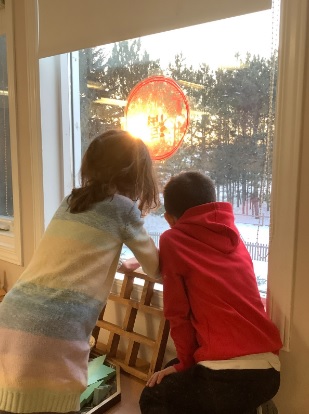
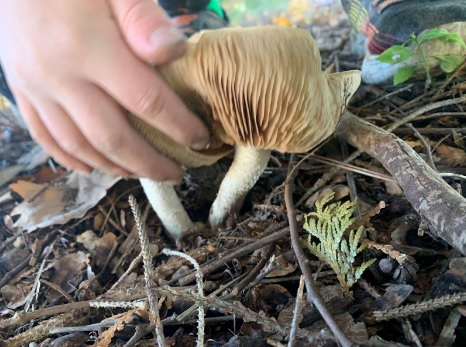
The materials we offer both indoors and outdoors are intentional, often locally sourced and made from natural materials. For example, we have wooden stumps as seating, our furniture is made from local woodworkers, we search for recycled and repurposed quality materials to enhance our program. We deeply value the power of nature within our program and view the natural world as an extension of our classroom. Our outdoor spaces offer rich, meaningful connections with nature where they can co-construct and collaborate with the endless possibilities that nature offers us. We visit many natural and lush spaces throughout the week, exploring gratitude and understanding of what the land offers us and our role to protect and celebrate the earth and all of its beauty.
“What children learn does not follow as an automatic result from what is taught, rather, it is in large part due to the children’s own doing, as a consequence of their activities and our resources.”
Loris Malaguzzi
 krpfamilycentre.com
You must be logged in to post a comment.